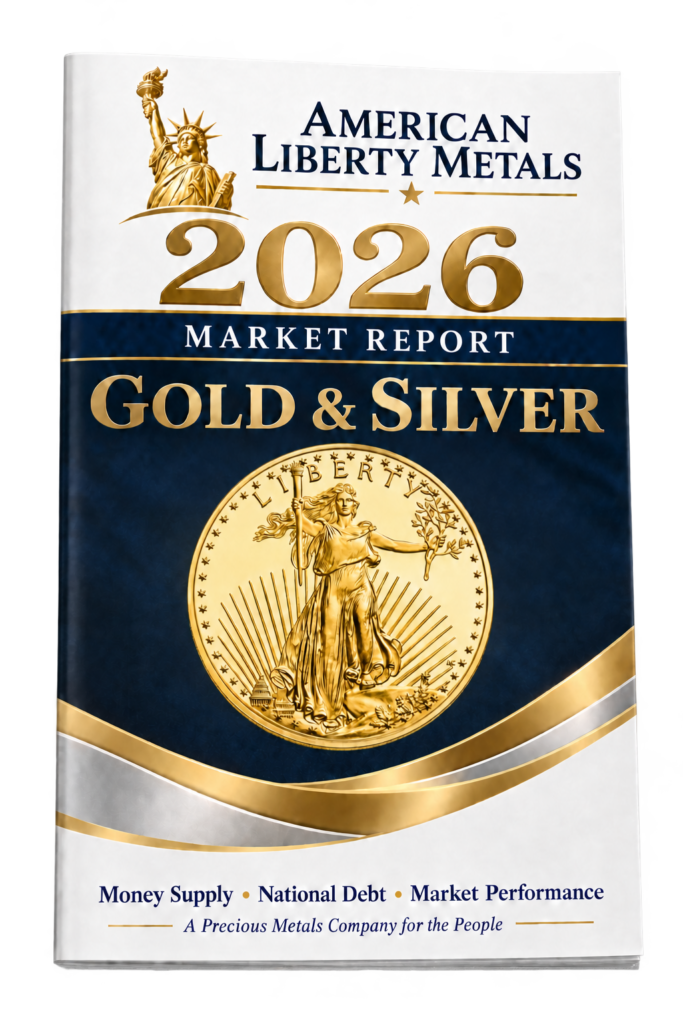


How Much Does a Gold IRA Really Cost? Understanding the Fees Most Investors Overlook
Published by American Liberty Metals | October 2026
Investing in a Gold IRA can offer an opportunity to diversify retirement savings through ownership of physical precious metals. However, before opening an account, investors should understand one critical question: How much does a Gold IRA actually cost?
Many precious metals companies advertise low account fees, free storage, or promotional incentives. Yet these offers may not reflect the total cost of acquiring and maintaining physical gold in a retirement account.
A Gold IRA can involve dealer spreads, custodial administration fees, depository storage expenses, setup charges, and eventual liquidation costs.
Of these expenses, one can have a particularly significant financial impact from the moment the investment is made: the precious metals dealer spread.
Understanding these expenses can help investors evaluate competing offers and make more informed retirement investment decisions.
1. The Dealer Spread: Potentially the Largest Cost of a Gold IRA
One of the most important—and frequently misunderstood—expenses associated with investing in physical precious metals is the dealer spread.
The dealer spread reflects the difference between the amount an investor pays to acquire precious metals and the price a dealer would pay to repurchase those metals at the same moment.
Precious metals dealers operate businesses that involve sourcing, acquiring, distributing, and facilitating the purchase of physical gold and silver. Pricing incorporates these services, operating expenses, and the dealer’s gross margin.
Unlike annual account administration fees, the financial impact of the spread can amount to thousands of dollars immediately upon purchase.
Understanding the Dealer Spread Through an Example
Consider an investor who purchases $100,000 in physical gold for a retirement account.
If those precious metals have an immediate resale value of $90,000, the investor faces a $10,000 difference between the initial purchase amount and the amount recoverable through an immediate sale.
That represents a 10% immediate resale discount relative to the purchase price.
Now consider three hypothetical transactions:
| Initial Purchase | Immediate Resale Value | Difference |
|---|---|---|
| $100,000 | $95,000 | $5,000 |
| $100,000 | $90,000 | $10,000 |
| $100,000 | $70,000 | $30,000 |
These figures are hypothetical illustrations, not actual dealer quotations.
The implications of this difference become particularly important when examining how much the value of gold must appreciate before the investor can recover the initial purchase amount.
The higher the initial purchase-to-resale difference, the greater the appreciation required to reach the original investment value, assuming the same resale pricing relationship remains in effect.
The Commodity Futures Trading Commission (CFTC) provides an investor advisory on purchasing physical precious metals, which encourages investors to investigate dealer pricing, fees, and liquidation arrangements before making an investment.
How Much Must Gold Appreciate to Recover the Initial Spread?
Suppose an investor purchases $100,000 in precious metals with an immediate resale value of $90,000.
Under an unchanged resale pricing relationship, the value of those metals must appreciate by approximately 11.11% for the investor to recover the original purchase price.
Now consider a larger difference.
If a $100,000 purchase has an immediate resale value of $70,000, the metals must appreciate by approximately 42.86% to recover the original $100,000.
| Initial Resale Discount | Required Appreciation to Break Even |
|---|---|
| 5% | 5.26% |
| 10% | 11.11% |
| 15% | 17.65% |
| 20% | 25.00% |
| 30% | 42.86% |
Calculations assume no additional fees and a constant relationship between the metal’s market value and its resale price. Actual buyback prices, premiums, and market conditions can change.
These calculations demonstrate why investors should evaluate the relationship between purchase prices and immediate resale values before committing substantial retirement funds to physical precious metals.
Even relatively modest differences in pricing can materially affect the economic outcome of an investment.
2. Annual Custodian and Administration Fees
A Gold IRA is generally established as a self-directed Individual Retirement Account, allowing investors to hold certain qualifying physical precious metals rather than limiting investments to conventional financial securities.
Unlike a traditional brokerage IRA, a self-directed precious metals IRA requires an authorized trustee or custodian capable of administering the account and coordinating transactions involving eligible metals.
A Gold IRA custodian typically performs several functions, including maintaining account records, administering transactions, coordinating depository arrangements, and providing applicable tax reporting.
These services generally involve annual administration fees.
Illustrative annual cost: $75–$300 or more.
Some custodians charge a flat annual amount, while others establish fees according to account value or the type of assets held.
For example, an investor with a $50,000 Gold IRA and a $125 annual custodial administration fee incurs an annual expense equivalent to 0.25% of the initial account value.
Although these expenses may appear modest compared with the initial dealer spread, they accumulate over time.
Investors should determine whether custodial fees are fixed, variable, or subject to change as the account grows.
3. Precious Metals Storage and Insurance Fees
Physical precious metals held within a Gold IRA generally must remain in qualifying custody arrangements rather than being stored personally by the account owner.
The Internal Revenue Service establishes specific rules concerning eligible precious metals and IRA ownership arrangements.
Investors can review these requirements through the IRS guidance on investments in collectibles and qualifying precious metals.
Precious metals are commonly maintained through a depository working with the IRA custodian.
Depositories provide secure storage arrangements, inventory administration, and applicable insurance coverage.
Illustrative annual storage cost: $100–$250 or more.
Two common storage options include:
Segregated Storage
Under segregated storage arrangements, the account’s precious metals are specifically identified and maintained separately from other customers’ holdings.
Non-Segregated Storage
Under non-segregated arrangements, precious metals may be held alongside other customers’ holdings while the depository maintains appropriate ownership and inventory records.
Segregated storage frequently carries a higher fee.
Investors should also determine whether insurance coverage is incorporated into the quoted storage charges or assessed separately.
4. Gold IRA Setup Fees
Opening a Gold IRA may involve a one-time account establishment charge.
The fee compensates the custodian for services related to opening and administering a new self-directed retirement account.
Illustrative setup cost: $0–$100.
Some providers waive account setup fees or reimburse investors through promotional arrangements.
While these offers may reduce the initial cost of establishing the account, investors should avoid evaluating a Gold IRA solely on the basis of setup charges.
An investor who saves $50 or $100 on account establishment but pays thousands of dollars more for the underlying precious metals may face a materially higher total investment cost.
For this reason, setup fees should be evaluated alongside the dealer spread, annual account expenses, and storage arrangements.
5. Additional Costs When Selling or Closing a Gold IRA
The expenses associated with physical precious metals ownership do not necessarily end after the initial purchase.
Depending on the custodian, dealer, and depository, investors may encounter additional fees when selling metals, transferring retirement assets, or closing an account.
These may include transaction processing charges, account termination fees, wire transfer expenses, shipping and handling costs, and charges related to physical distributions.
An additional consideration is the price at which the investor’s precious metals can be sold.
A dealer’s willingness to repurchase precious metals does not necessarily mean the dealer will offer the original purchase price or the current retail selling price.
Investors should therefore ask how a dealer establishes its buyback prices and whether any additional liquidation fees apply.
What Happens When Retirement Funds Are Withdrawn?
Gold IRAs remain subject to applicable retirement account tax rules.
Distributions from traditional IRAs may generate ordinary income tax obligations, and certain early distributions may be subject to additional taxes.
The IRS provides detailed information about retirement account distributions and rollover requirements.
Investors considering a rollover from an existing retirement account should understand the distinction between direct transfers, direct rollovers, and distributions paid to the account holder.
Improperly completed transactions may result in unexpected tax consequences.
6. What Does a $50,000 Gold IRA Really Cost?
To understand how these expenses can accumulate, consider a hypothetical investor purchasing $50,000 in physical gold through a self-directed IRA.
The example assumes an immediate purchase-to-resale discount of 10%, along with moderate annual administration and storage charges.
| Expense | Illustrative Amount |
|---|---|
| Initial precious metals purchase | $50,000 |
| One-time account setup fee | $50 |
| Annual custodian administration | $125 |
| Annual depository storage | $150 |
| Dealer spread impact (10% immediate resale discount) | $5,000 |
| Total first-year fees and spread impact | $5,325 |
This hypothetical example assumes that fees are paid separately from the $50,000 metal purchase and that metal prices do not change. The $5,000 spread impact is a difference in immediate resale value, not an additional fee charged on top of the purchase price.
Under these assumptions, the immediate resale value of the purchased metals would be $45,000.
Including the $325 in separately paid account fees, the investor’s total initial and first-year expenditure would be $50,325.
If the metals were immediately sold for $45,000, the economic shortfall would be $5,325, excluding any additional liquidation expenses.
This example illustrates why the initial purchase-to-resale price difference may represent a substantially larger economic consideration than recurring account fees.
Over longer holding periods, however, custodial and storage expenses also become increasingly important.
7. Are Gold IRA Promotional Offers Really Free?
Some precious metals companies advertise promotional incentives designed to attract retirement investors.
These offers may include free account setup, waived administration fees, complimentary storage, or promotional precious metals.
Although such incentives can provide genuine value, investors should evaluate them in the context of the entire transaction.
For example, a dealer offering $500 in waived account fees may still charge materially more for the underlying precious metals than another provider.
The financial value of the promotional offer must therefore be weighed against the purchase price, immediate resale value, ongoing expenses, and any conditions associated with the promotion.
Before accepting an incentive, investors should ask a simple question:
If I purchased these precious metals today and decided to sell them tomorrow, how much would I receive?
The answer can reveal substantially more about the economics of the transaction than the advertised account setup fee.
8. How American Liberty Metals Approaches Precious Metals Pricing
At American Liberty Metals, we believe that investors deserve clear information about precious metals pricing before making an investment decision.
Our mission is to make precious metals investing more approachable by offering fair pricing, honest guidance, and exceptional service.
Rather than focusing exclusively on promotional incentives, we encourage investors to understand the actual purchase price of their precious metals, the applicable dealer spread, and the potential cost of future liquidation.
American Liberty Metals’ stated dealer spread range is 4.99%–19.99%, depending on the transaction and product. Most transactions fall between 4.99-9.99%
This spread represents the company’s gross margin for sourcing, acquiring, and providing the product.
Individual purchase prices and immediate resale values should be confirmed at the time of the transaction. The stated dealer spread range should not be interpreted as a guaranteed immediate resale discount or buyback quotation.
Custodian, depository, and other third-party expenses may apply separately.
We believe that investors who understand these costs are better positioned to make informed decisions about incorporating physical precious metals into their retirement strategy.
9. Questions Every Investor Should Ask Before Opening a Gold IRA
Before committing retirement assets to physical precious metals, consider asking your dealer and custodian the following questions:
- What is the complete purchase price of the specific precious metals I am buying?
- What is the immediate buyback value of those same products?
- What dealer spread applies to the purchase?
- Are custodial administration and depository storage fees charged separately?
- Will my precious metals be held in segregated or non-segregated storage?
- Are there additional charges associated with selling, transferring, or closing my account?
- Are promotional incentives reflected in the quoted purchase price?
- Which precious metals products are eligible for my IRA?
- How are dealer buyback prices determined?
- Can I review a complete explanation of applicable fees and transaction terms before proceeding?
A reputable precious metals provider should be willing to explain these considerations clearly and provide applicable fee disclosures.
The CFTC’s investor advisory on physical precious metals offers additional questions investors can use when evaluating prospective precious metals dealers.
Final Thoughts: Transparency Matters More Than Promotional Pricing
A Gold IRA can serve as one component of a diversified retirement investment strategy, but understanding the complete cost of physical precious metals ownership is essential.
Although setup fees, annual administration charges, and storage expenses deserve consideration, the dealer spread can have the greatest immediate impact on the economics of a precious metals purchase.
Investors who understand the relationship between purchase prices, resale values, and ongoing account expenses are better equipped to compare competing offers.
At American Liberty Metals, we believe that transparency should be a fundamental part of every precious metals transaction. Now you know how much a gold IRA really costs.
Interested in Learning More About Opening a Gold IRA?
Contact American Liberty Metals to speak with a precious metals specialist about eligible products, purchase pricing, and important considerations before investing.
American Liberty Metals — A Precious Metals Company for the People.
Important Disclosure: This article is provided for educational purposes only and does not constitute individualized investment, legal, or tax advice. Precious metals prices fluctuate and investments can lose value. IRA eligibility, custody requirements, contributions, distributions, and tax treatment are subject to applicable laws and regulations. American Liberty Metals is a precious metals dealer, not an IRA custodian. Consult qualified financial and tax professionals before making retirement investment decisions.